![{[setting('site_name')]}](https://www.projxnews.com/uploads/setting/16983847711140531930.webp)
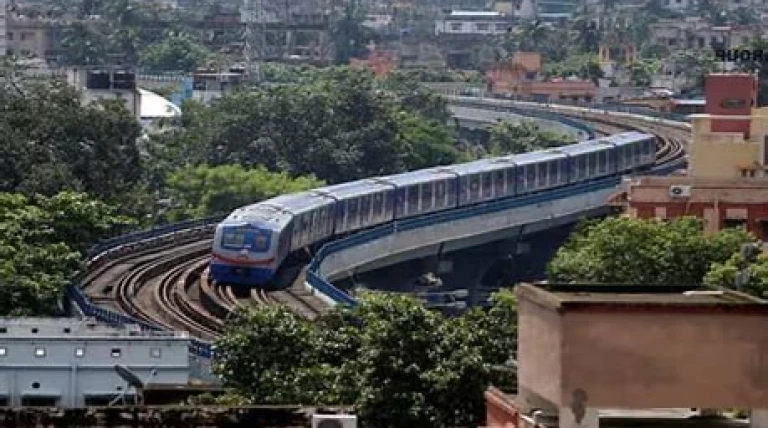

The Centre has approved rail infrastructure projects worth ₹895.3 crore to strengthen Kolkata Metro Blue Line and rebuild a major ageing railway bridge, providing a significant boost to transport infrastructure in West Bengal.
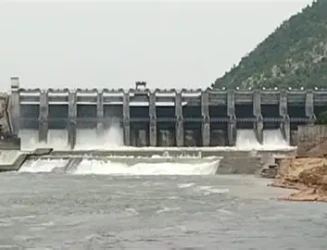
Of the total allocation, ₹671.7 crore has been sanctioned for the modernisation of the metro’s North-South Blue Line corridor, while ₹223.5 crore will be utilised for reconstruction of a railway bridge over the Damodar River under the South Eastern Railway network.
Railway officials said the metro upgrade is expected to substantially improve commuter convenience by increasing train frequency and reducing waiting times. Once completed, the corridor is expected to support operations at a 2.5-minute headway, allowing significantly more services compared to the present schedule. The line currently handles nearly six lakh passengers every day.
The 41-year-old corridor, which runs through Kolkata, was originally designed for trains operating at five-minute intervals. However, growing ridership has pushed the system close to its operational limits, making higher-frequency services essential to manage peak-hour congestion.
The modernisation programme includes a major overhaul of infrastructure to support faster and more efficient operations. Planned works include installation of traction substations at stations, replacement of the existing steel third rail with aluminium, and migration from the current Train Protection and Warning System (TPWS) to the more advanced Communication-Based Train Control (CBTC) technology.
The power upgrade component includes seven new traction substations valued at ₹291 crore, improvements to auxiliary and traction systems, and conversion of power supply from 11 kV to 33 kV across important sections. Reinforcement work will also be carried out between Esplanade and New Garia, as well as on elevated stretches between Netaji and Kavi Subhas stations.
Officials said the CBTC system, which enables trains to function as “moving blocks” through continuous communication with signalling equipment, could eventually allow train intervals of nearly 90 seconds. At present, operations are constrained by legacy signalling systems and a maximum speed limit of 55 kmph on most sections, except stretches such as Noapara to Dakshineswar where trains can operate at up to 80 kmph.
The Blue Line has also faced operational challenges in recent months. In July 2025, services to Kavi Subhas station were suspended after cracks were detected on one of its platforms. Since then, trains have been operating only up to Shahid Khudiram station, with reconstruction work on the terminal expected to begin soon.
Officials added that the existing power infrastructure is approaching saturation and has become increasingly difficult to maintain because of shortages of spare components. The proposed upgrades are expected to improve reliability, minimise service disruptions, and support future capacity expansion on one of Kolkata’s busiest metro corridors.
News by Rahul Yelligetti.