![{[setting('site_name')]}](https://www.projxnews.com/uploads/setting/16983847711140531930.webp)

In response to rising urbanization and growing infrastructure demands, Union Minister Rao Inderjit Singh has reviewed key development projects in Gurugram and directed officials to formulate a long-term water management strategy aligned with the city’s projected population growth through 2051.
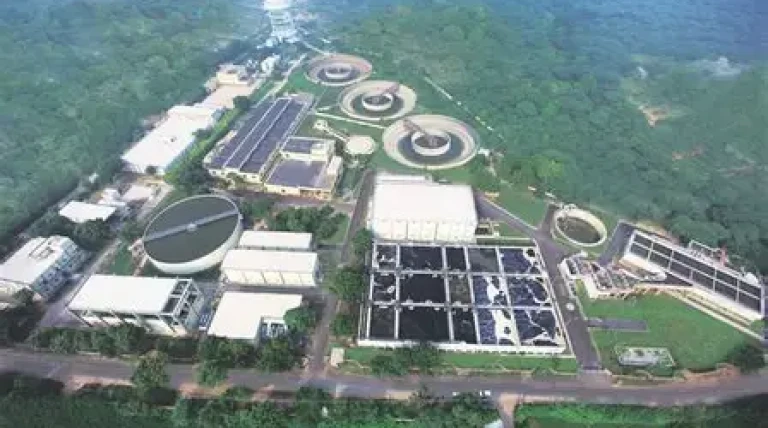
With Gurugram’s population expected to reach approximately 66.2 lakh by 2041, water demand is forecast to nearly double to around 1,408.9 million litres per day (MLD). The projections underscore the need for sustainable resource planning and expansion of water supply infrastructure. At present, the city receives around 400 MLD from the Chandu Budhera Water Treatment Plant and 270 MLD from the Basai Water Treatment Plant, while peak demand is estimated at about 750 MLD.
Officials informed the minister that a study conducted by the Indian Institute of Technology (IIT), Roorkee is being used to assess future water requirements and support long-term infrastructure planning. The review focused on identifying measures to ensure adequate water availability for the city’s expanding population and industrial base.
The minister also instructed the Haryana State Pollution Control Board to strengthen oversight of sewage treatment plants (STPs), particularly those operated by private residential societies. He called for regular inspections, including monitoring of the Manesar STP, and emphasized strict enforcement of environmental compliance standards.
In addition to water and wastewater management, the review covered several major infrastructure projects, including the Palwal–Sohna–Manesar–Sonipat Orbital Rail Corridor, the Old Gurugram Metro project, the Delhi–Bawal Regional Rapid Transit System (RRTS) corridor, and road development initiatives such as the expansion and upgrading of the Southern Peripheral Road.
News by Rahul Yelligetti.