![{[setting('site_name')]}](https://www.projxnews.com/uploads/setting/16983847711140531930.webp)
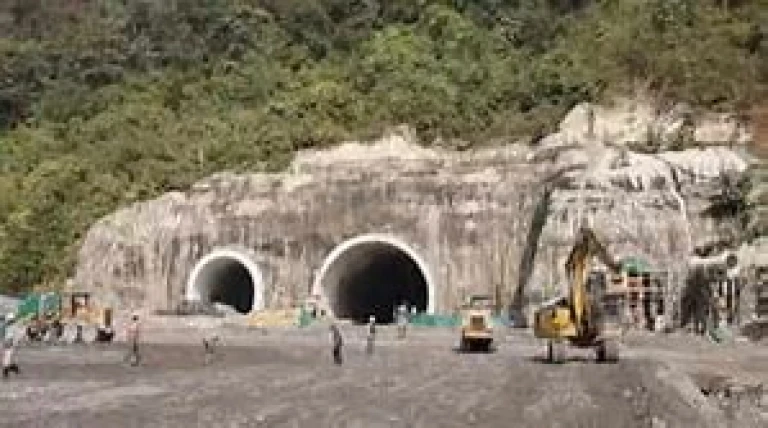

The Rishikesh–Karnaprayag Railway Project in Uttarakhand has achieved a major engineering milestone, with Tunnel No. 8 becoming the longest railway tunnel in India.
Stretching approximately 14.58 km between Devprayag and Janasu, the tunnel forms a key segment of the 125-km broad-gauge rail line. The project is expected to significantly improve connectivity across the Himalayan region and serve as an important transport link for the Char Dham pilgrimage circuit.
The construction has used advanced tunnelling methods, combining Tunnel Boring Machines (TBMs) in stable geological sections with the New Austrian Tunnelling Method (NATM) in more complex and fragile mountain terrain. This hybrid approach has enabled safer and more efficient execution in challenging Himalayan conditions.
The tunnel is equipped with modern infrastructure systems, including double-line tracks, advanced drainage facilities, ventilation shafts, and emergency escape passages to ensure operational safety in extreme environments. In line with environmental considerations, around 83% of the overall rail alignment is being constructed underground to minimise ecological impact.
With an estimated cost of ₹37,000 crore and a scheduled completion target of 2028, the project is expected to connect the Garhwal region more effectively with the rest of India, boosting tourism, regional mobility, and economic development.
News by Rahul Yelligetti.